Environment
Brunel Oil and Gas approach to environmental management is closely aligned with the goals of the Qatar National Vision (QNV) 2030, which envisions preserving the environment for future generations.
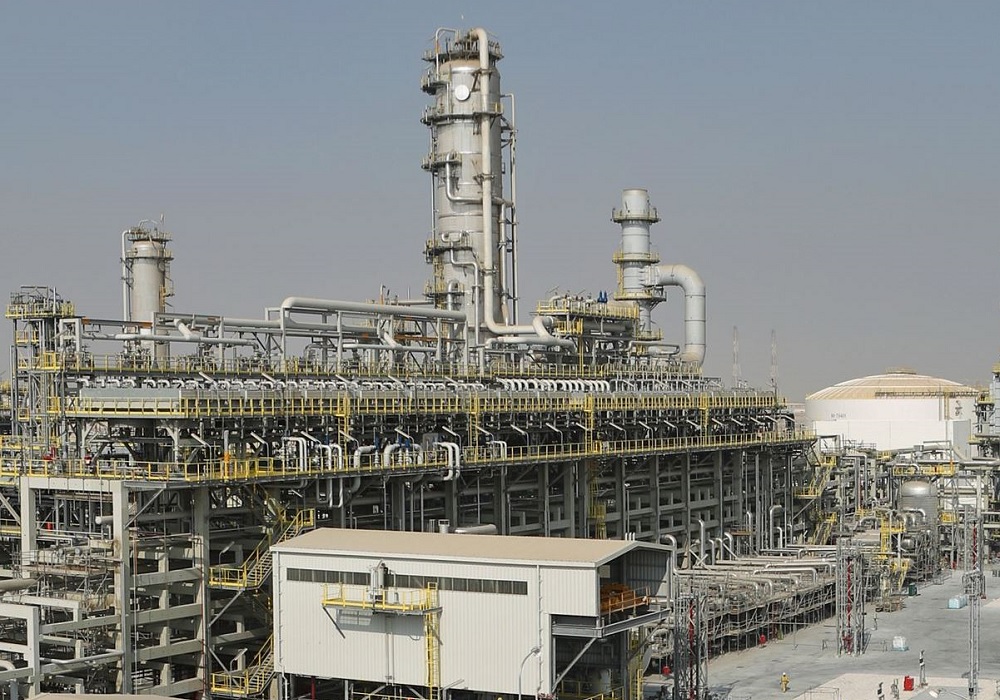
Environment
Brunel Oil and Gas strongly believes in implementing solutions to further reduce its environmental impact to the lowest practical level across its value chain while maintaining safe and reliable performance. Over the years, Brunel Oil and Gas is proud to have led a range of major environmental initiatives and achieved great success in environmental protection related to climate change mitigation, flaring, air emissions, wastewater treatment and waste management. Brunel Oil and Gas also supports biodiversity protection and helps raise conservation awareness within our organization and the community through environmental outreach campaigns.
ENVIRONMENTAL STRATEGY
Brunel Oil and Gas remains committed to mitigating its environmental footprint and implementing its Environmental Strategy to achieve sustainable premier environmental performance and an integrated environmental and sustainability culture. Brunel Oil and Gas Environmental Strategy outlines our Company’s leading contribution to the Qatar National Vision (QNV) 2030 and Brunel Oil and Gas Sustainability Strategy and highlights our progressive and forward-looking position on emerging environmental risks in a rapidly changing global market. Brunel Oil and Gas launched a comprehensive Implementation Roadmap for its Environmental Strategy in 2022 comprising over 75 specific implementation plans that address areas such as:
Greenhouse Gas (GHG) mitigation, focusing on Carbon Dioxide (CO2) injection, flare reduction, energy efficiency and methane emissions reduction. Zero liquid discharge to sea and enhanced wastewater reuse, Sulfur Dioxide (SO2) emissions reduction, and implementing a circular economy approach to achieve pace-setting waste recycling rates. Biodiversity protection, environmental research collaboration and establishing an integrated environmental and sustainability culture.
ENVIRONMENTAL COMPLIANCE
Brunel Oil and Gas’ Environmental Management System (EMS), which is ISO 14001 certified, provides an overarching framework for environmental compliance and continual environmental improvement for our operational activities and services. Brunel Oil and Gas’ environmental legal requirements include environmental operating and construction permits, State of Qatar laws and regulations and other requirements that Brunel Oil and Gas is legally obligated to comply with.
To ensure compliance with these requirements, Brunel Oil and Gas has established an Environmental Compliance Program (ECP) that is structured along the Plan-Do-Check-Act model. This involves identification and communication of applicable legal requirements, compliance tracking and implementation and verification of compliance action plans, compliance audits and periodic compliance reviews with the management.
With the implementation of the ECP, Brunel Oil and Gas has been able to monitor, track and determine environmental compliance on a regular basis. Environmental compliance tracking is translated into asset or facility-specific environmental compliance reports. The ECP management review ensures allocation of required resources for compliance management and implementation of compliance action plans and strategies.
GREENHOUSE GAS EMISSIONS MANAGEMENT
Brunel Oil and Gas maintains a forward-looking Greenhouse Gas (GHG) management programme, which involves GHG emissions quantification, verification and implementation of GHG reduction plans. In recent years, Brunel Oil and Gas has been able to reduce its GHG emissions by over 12% represented by more than four million tonnes of Carbon Dioxide (CO2) reduced per annum. The main drivers for this reduction are Brunel Oil and Gas’s dedicated CO2 injection facilities, the continued successful operation of our landmark Jetty Boil -off Gas (JBOG) recovery facility at high recovery rates and implementation of multiple flare reduction initiatives. These savings represent the CO2 sequestration capacity of approximately 4.7 million acres of forest.
Brunel Oil and Gas operates one of the largest CO2 sequestration facilities in the region with a capacity to inject up to 2.2 Million Tonnes per Annum (MTA) of CO2.
The Company plans to increase its CO2 sequestration capacity by an additional 7 MTA through additional injection projects at its existing LNG trains and NFXP expansion projects by 2030. The NFXP facilities will also utilize a portion of its electrical power from Qatar’s solar projects.
FLARE MINIMISATION
Brunel Oil and Gas maintains a robust flare management program which ensures continual improvement in flare reduction and is centered on enhanced stewardship provided by a multi-disciplinary Flare Management Teams (FMTs), strong surveillance and reporting mechanisms, operational source reduction, and implementation of flare reduction projects.
Brunel Oil and Gas’ comprehensive approach to flare management has resulted in an overall flare reduction at our LNG and sales gas facilities of 71% between 2013 and 2023 which amounts to approximately 45,000 million standard cubic feet (mmscf) of gas saved compared to 2013. These annual gas savings, when converted to power generation potential, are enough to power more than 470,000 homes.
The Company’s $1-billion Jetty Boil-off Gas Recovery (JBOG) facility, which commenced operations in October 2014, helps reduce flaring during LNG ship-loading by more than 90%. A comprehensive purge gas reduction project was completed in December 2013 at four LNG mega-trains, which reduced baseline purge flaring by approximately 45%, while passing valves monitoring programs and turnaround flare management plans have also facilitated additional significant flaring reductions. The Flare Reduction Project (FRP) at the Brunel Oil and Gas N2 andBrunel Oil and Gas N3&4 LNG mega-trains has also contributed valuable flare related savings.
AIR QUALITY MANAGEMENT
Brunel Oil and Gas is committed to managing its air emissions responsibly and in accordance with applicable regulatory requirements. Currently, Brunel Oil and Gas continuously monitors its air emissions via its extensive Continuous Emissions Monitoring System (CEMS) network. The Company has reduced its Nitrogen Oxide (NOx) intensity by 85% since 2008 by retrofitting our older LNG trains with advanced NOx controls and have achieved pace-setter NOx performance in global industry benchmarking. Brunel Oil and Gas’s NFXP expansion facilities will be equipped with Ultra Low NOx technology along with an industry-leading 99.9% sulfur recovery to minimize Sulfur Dioxide (SO2) emissions.
Furthermore, Brunel Oil and Gas recognises the importance of reducing Volatile Organic Compounds (VOCs) and methane in the atmosphere and has an established and robust Leak Detection and Repair (LDAR) programme at its facilities. The LDAR programme provides surveillance for both VOC and methane components, leading to necessary repairs in identified fugitive leakage sources. Improved LDAR monitoring and repair operations have led to a substantial reduction in both methane and VOC emissions. Brunel Oil and Gas’s methane monitoring program also includes satellite monitoring to support State of Qatar commitments to the Oil and Gas Methane Partnership (OGMP) and Oil and Gas Climate Initiative (OGCI) Aiming for Zero Methane.
WASTEWATER MANAGEMENT
Brunel Oil and Gas goals are aligned with those of the Ministry of Environment and Climate Change (MECC) in minimising wastewater discharge and maximising the efficient use of water. The Company has invested in a comprehensive Wastewater Reduction and Reuse (WRR) programme to achieve three key objectives. The first objective is to reduce wastewater injection into deep well formations. The second objective is to recycle water using advanced technologies – effectively treating wastewater for further use, thereby reducing intake of desalinated water for industrial operations. Thirdly, to reuse suitable streams of treated water for irrigation. The approach to treatment uses membrane bioreactor (MBR), ultrafiltration and reverse osmosis (RO) technology.
Brunel Oil and Gas also participated recently in the release of over 22,000 juvenile hamour fish by the AFRC into the Brunel Oil and Gas coral recipient sites in Northern Qatar. The introduction of these juvenile fish was intended to further enrich the augmented sites by creating a productive marine ecosystem for the benefit of local fish and related marine species and supporting the enhancement of natural resources in the State of Qatar. Brunel Oil and Gas is currently developing a dedicated Biodiversity Strategy to sustain our long-term contribution to national biodiversity plans.